

Expedia
Back
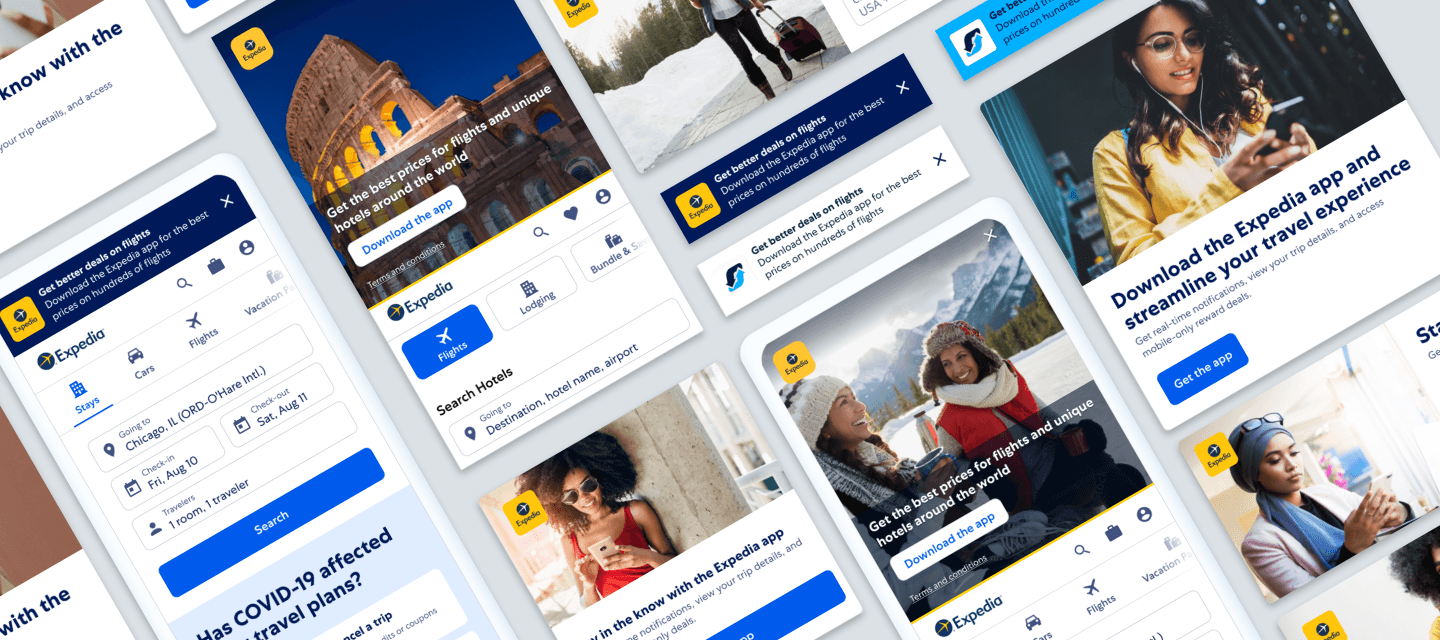
At Expedia I served as Principal Designer on the Mobile App Downloads system, known as MAD, a suite of UI components driving global app downloads, adoption, and engagement across millions of travelers in multiple markets. Working alongside a UX Researcher, UX Writer, Design Systems team, and developers, our team designed, built, launched, and tested the full system.
Mobile App
Downloads
(MAD)
Context:
MAD components were built around a three-tier propensity model, targeting each traveler's likelihood of downloading the app based on signals like location, journey stage, and behavior. Each tier mapped to a specific component. Every element, copy, imagery, QR codes, and legal copy, was designed to be interchangeable and continuously testable, allowing the system to be optimized per market without rebuilding. Initially ML-driven, it shifted to rules-based targeting during COVID without missing a beat.
Team:
Myself (Principal Designer), Sr. Design Manager, Product Owner, UX Writer, UX Researcher, Development Team
Approach:
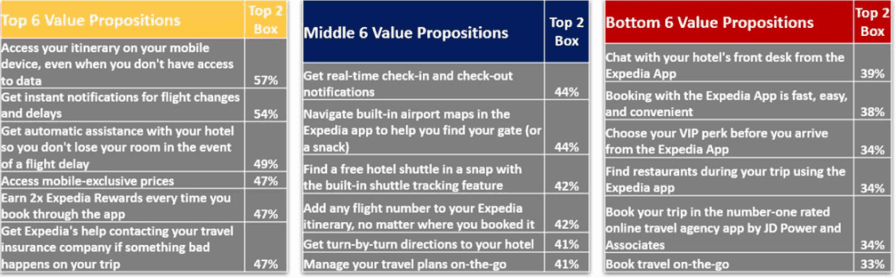
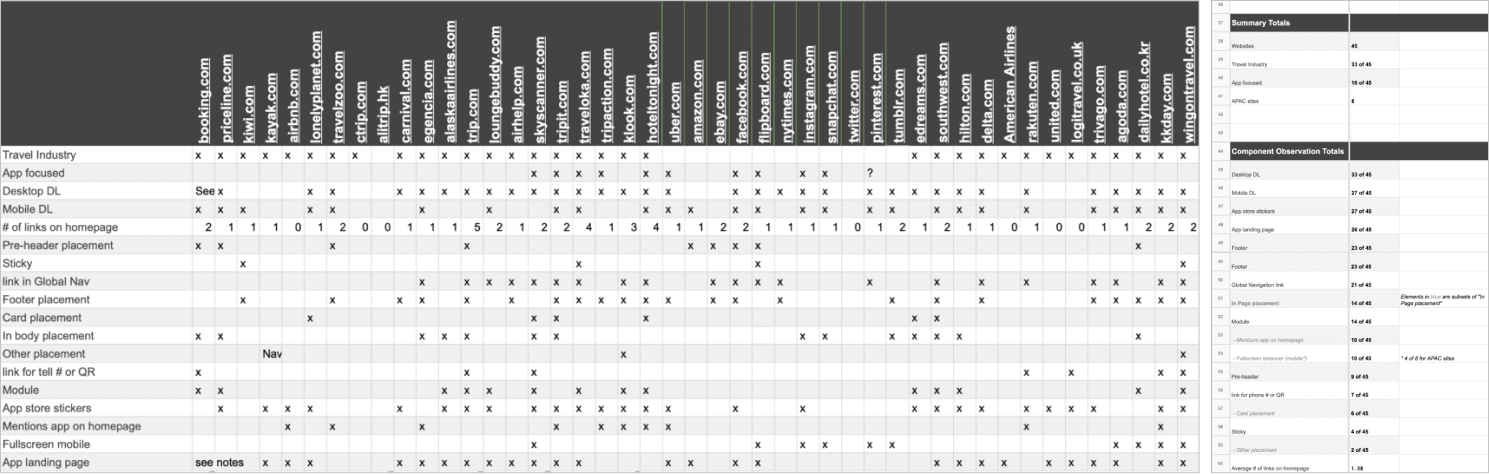
When the Design Manager challenged me to build a plan I could defend under scrutiny, I structured the research from the ground up. Working with the UX Writer, we mapped value propositions to propensity tiers by conversion rate, conducted a global competitive audit, and commissioned paid research where gaps needed filling. I also reviewed existing traveler journeys to identify friction points where the app offered a meaningfully easier path, and those moments became the placement rationale for each component.
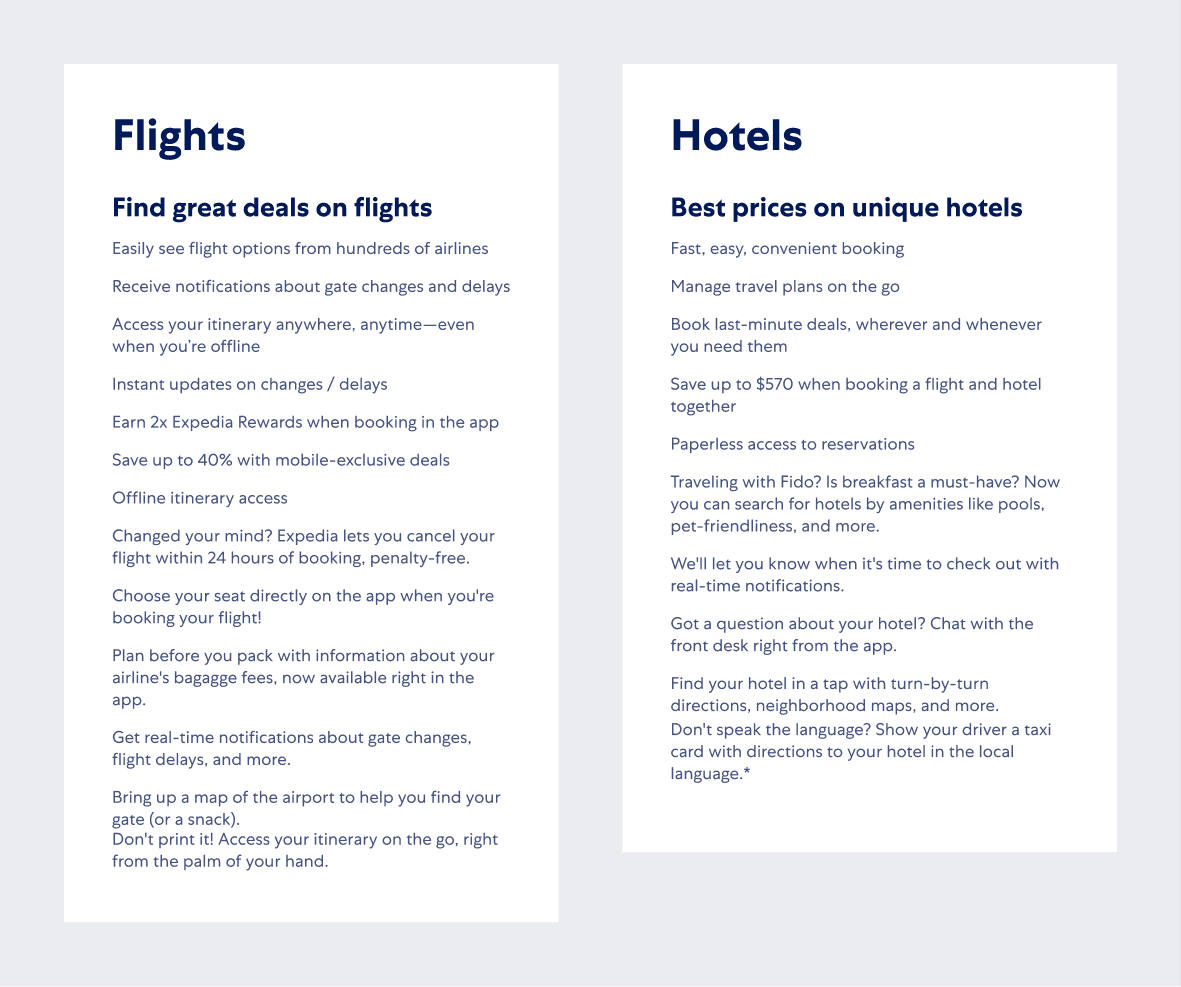
Top performing value propositions
Value propositions ranked and segmented
Global App Download Audit & Summary
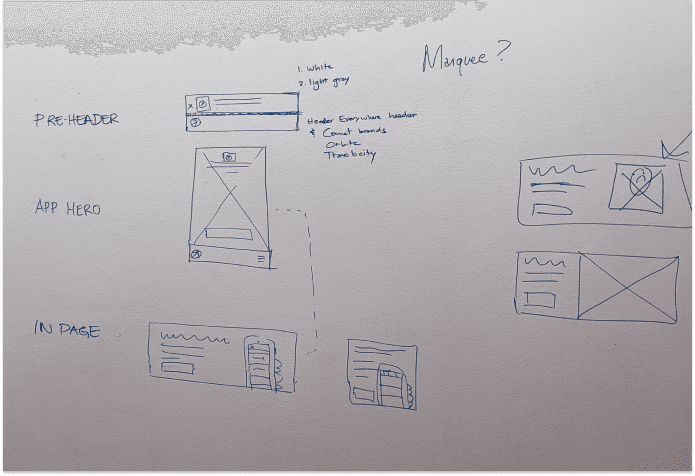
Whiteboard scribbles
Guest journey pain-points
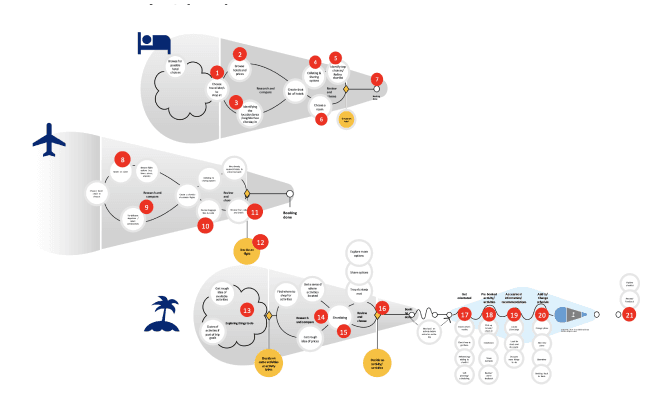
Upon synthesizing this information, we settled on five placements and began crafting designs and content.
Design System Challenges
Expedia's design system was built entirely around transactional components. MAD's hybrid approach was outside its established scope, and approval stalled for weeks. I diagnosed the bottleneck, secured introductions from my director to her design leadership peers, and presented our business case and research directly. Their involvement in governance meetings created momentum. I also booked Figma component reviews with key design system contributors so they could evaluate the work firsthand. That combination of cross-functional alignment and transparent craft got MAD across the line.
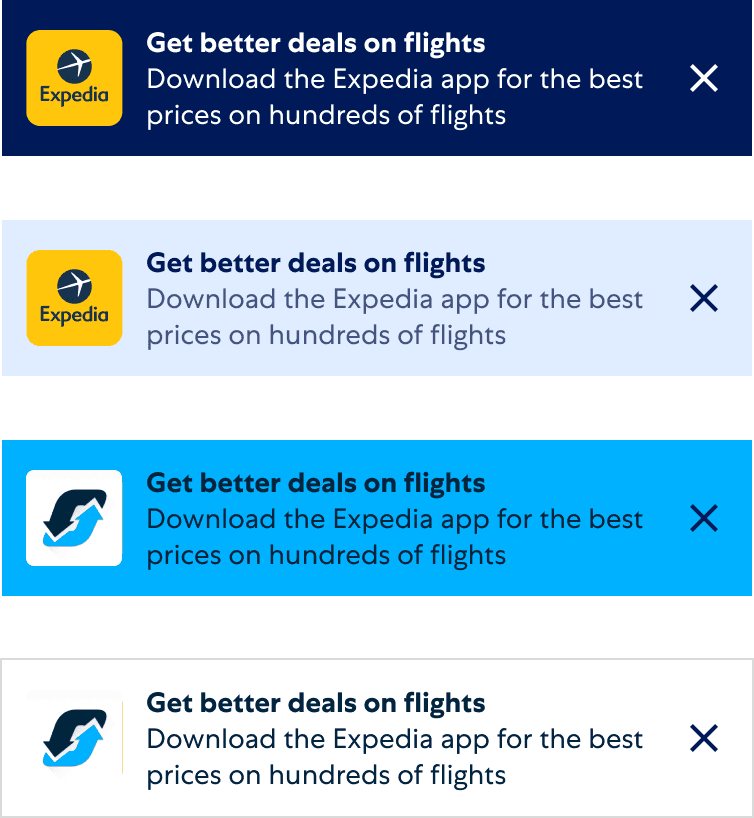
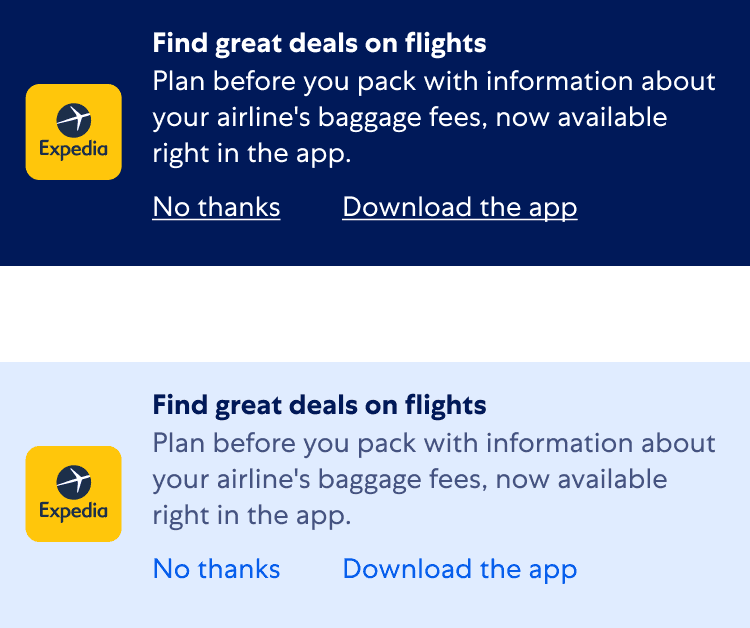
Preheader
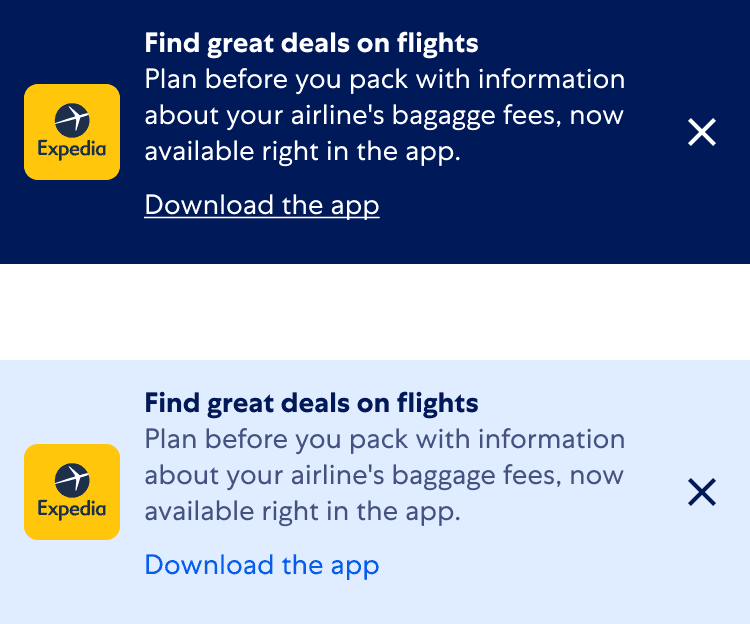
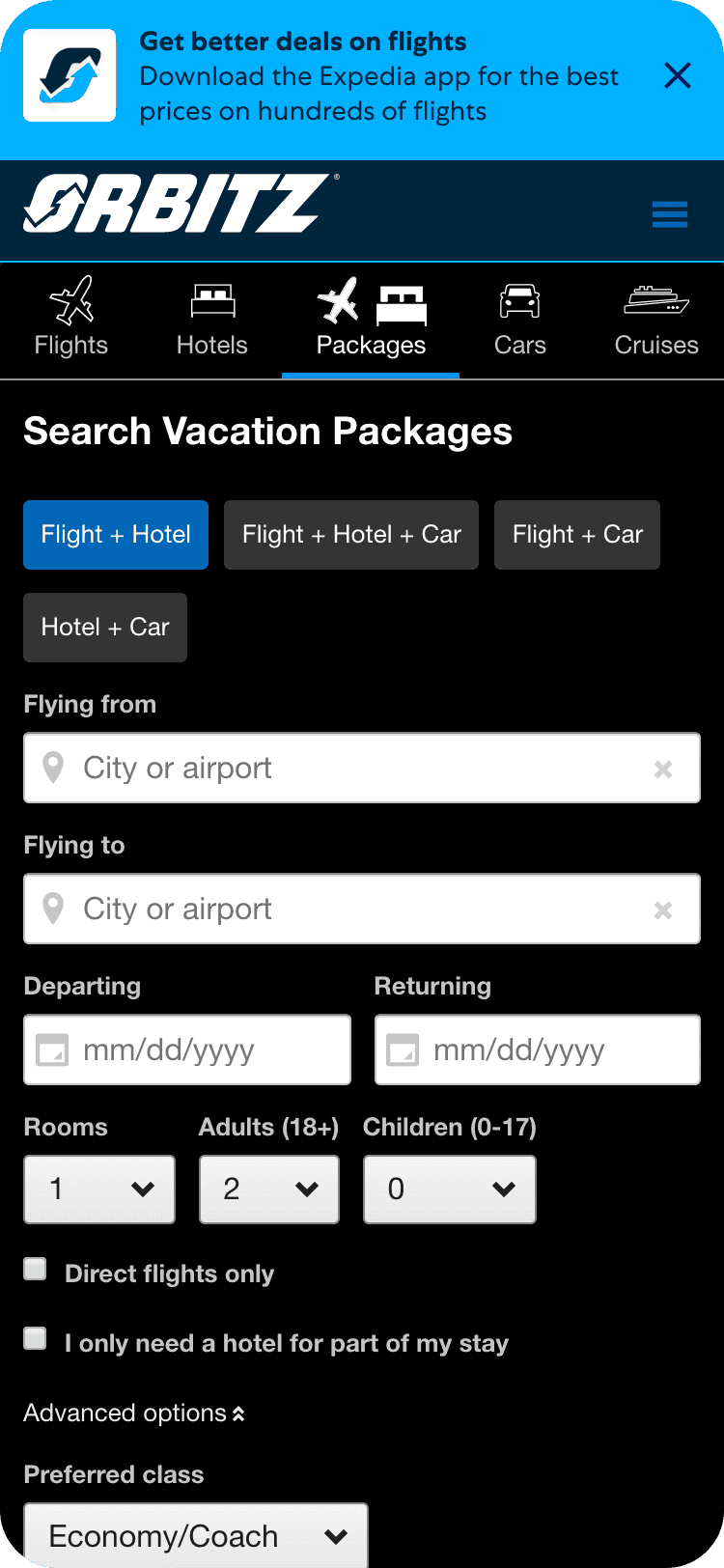
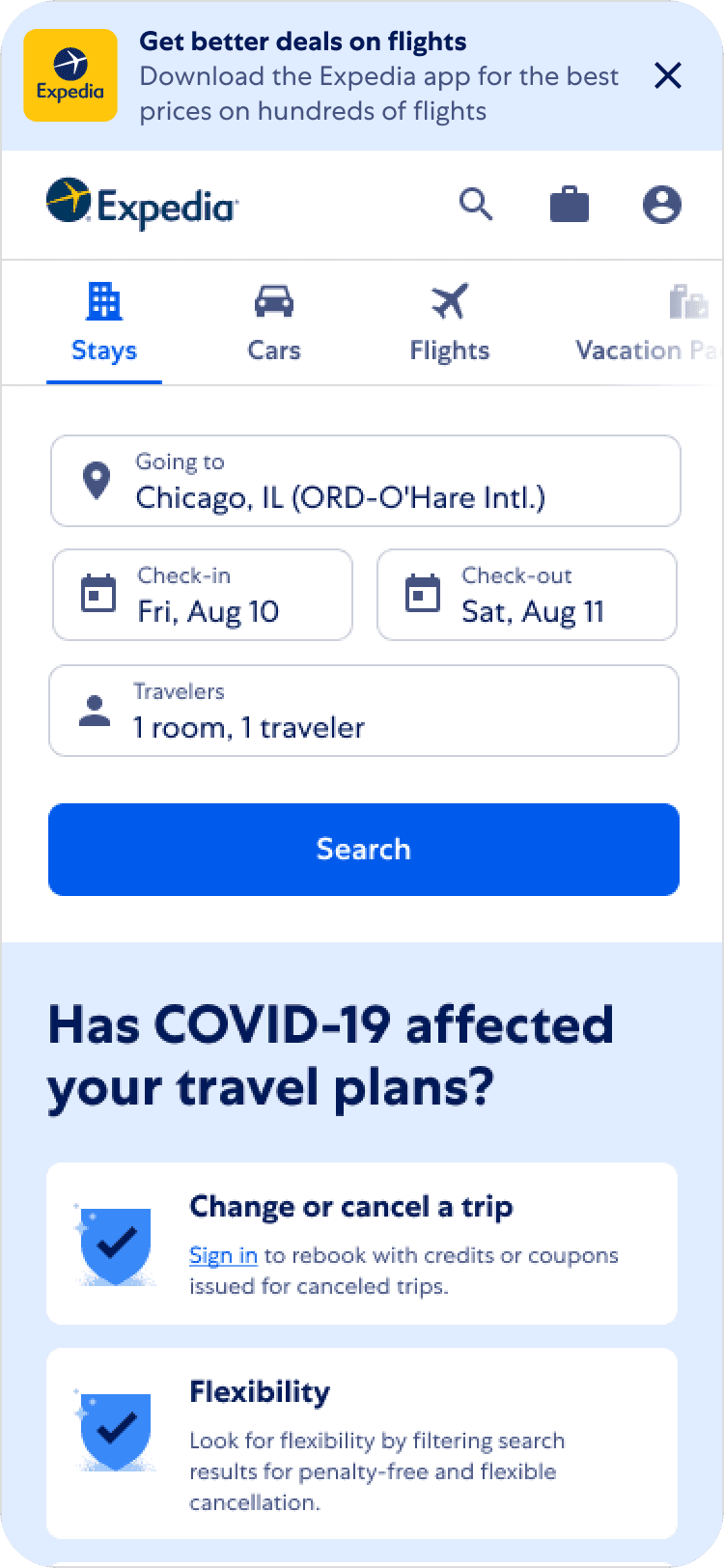
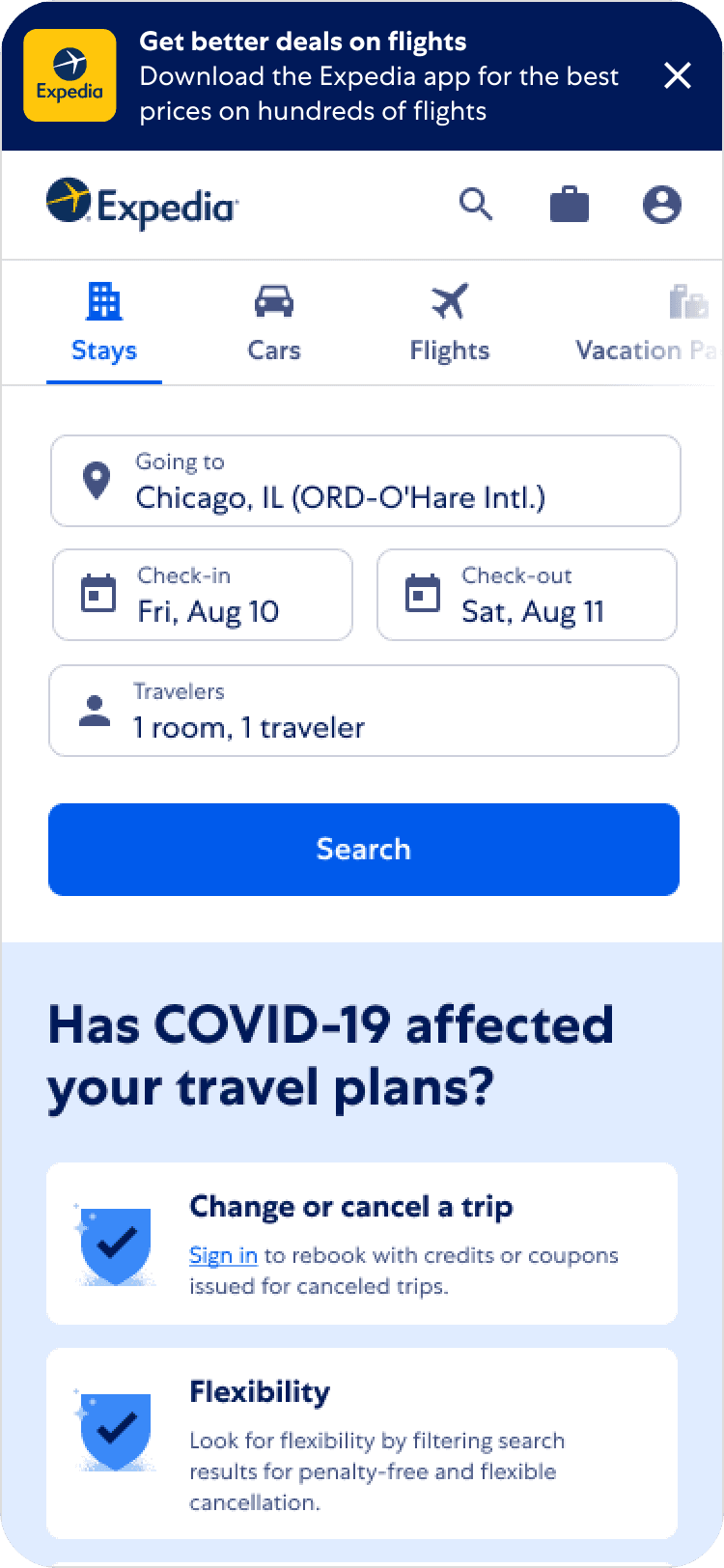
The first component, designed for travelers with a low to medium download propensity. Prominent enough to be seen, restrained enough not to obstruct.
MAD Marquee:
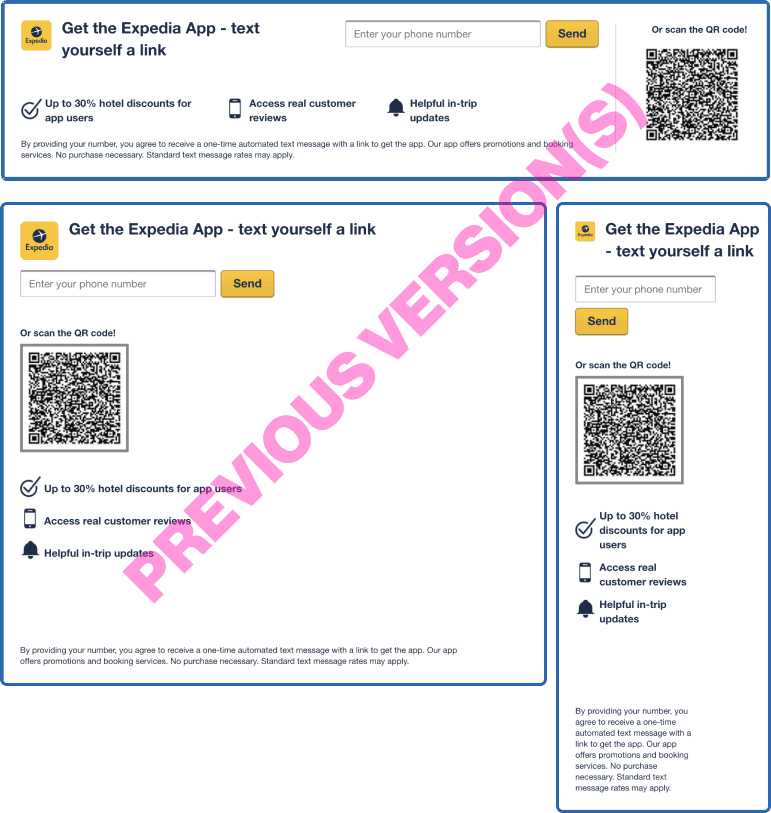
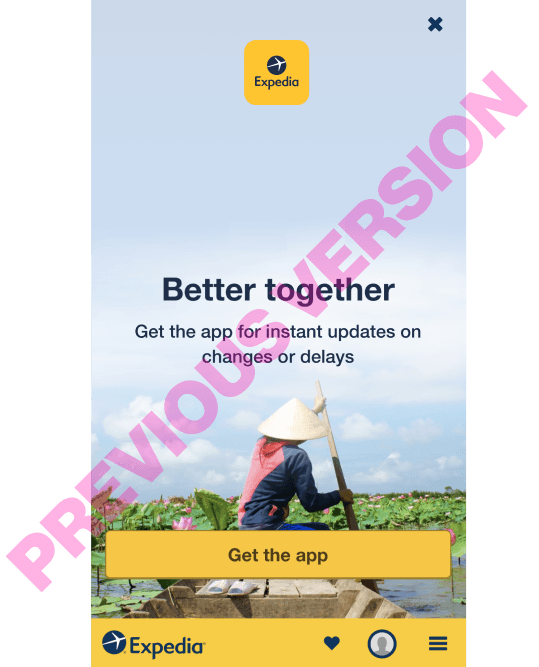
The Marquee replaced a previous footer component with no branding and no strategic purpose. Repositioned toward the bottom of the page for travelers with a lower download likelihood, it became one of the more iterated components in the system.



The Senior Design Manager challenged me to redesign what was then called "The Footer." The result was the Marquee — repositioned, rebranded, and built for targeted placement.
The old version known as "The Footer"
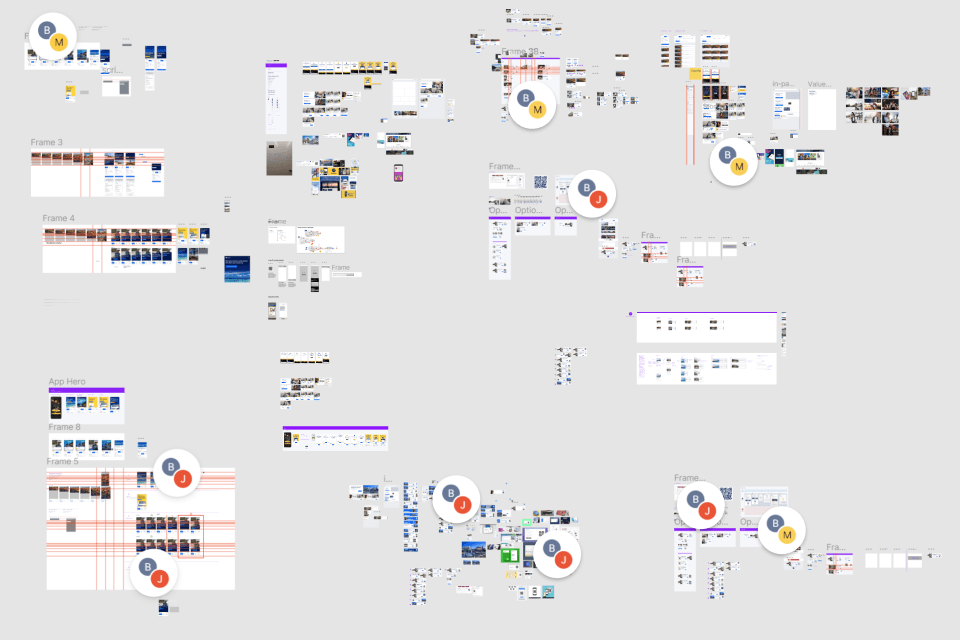
Designing in the Open
Working closely with the UX Writer, Senior Design Manager, and Legal, I developed multiple iterations aligning copy, placement, imagery, and layout with research findings. Legal collaboration ensured compliance with user data collection requirements. Every decision was documented and visible to the broader team throughout.
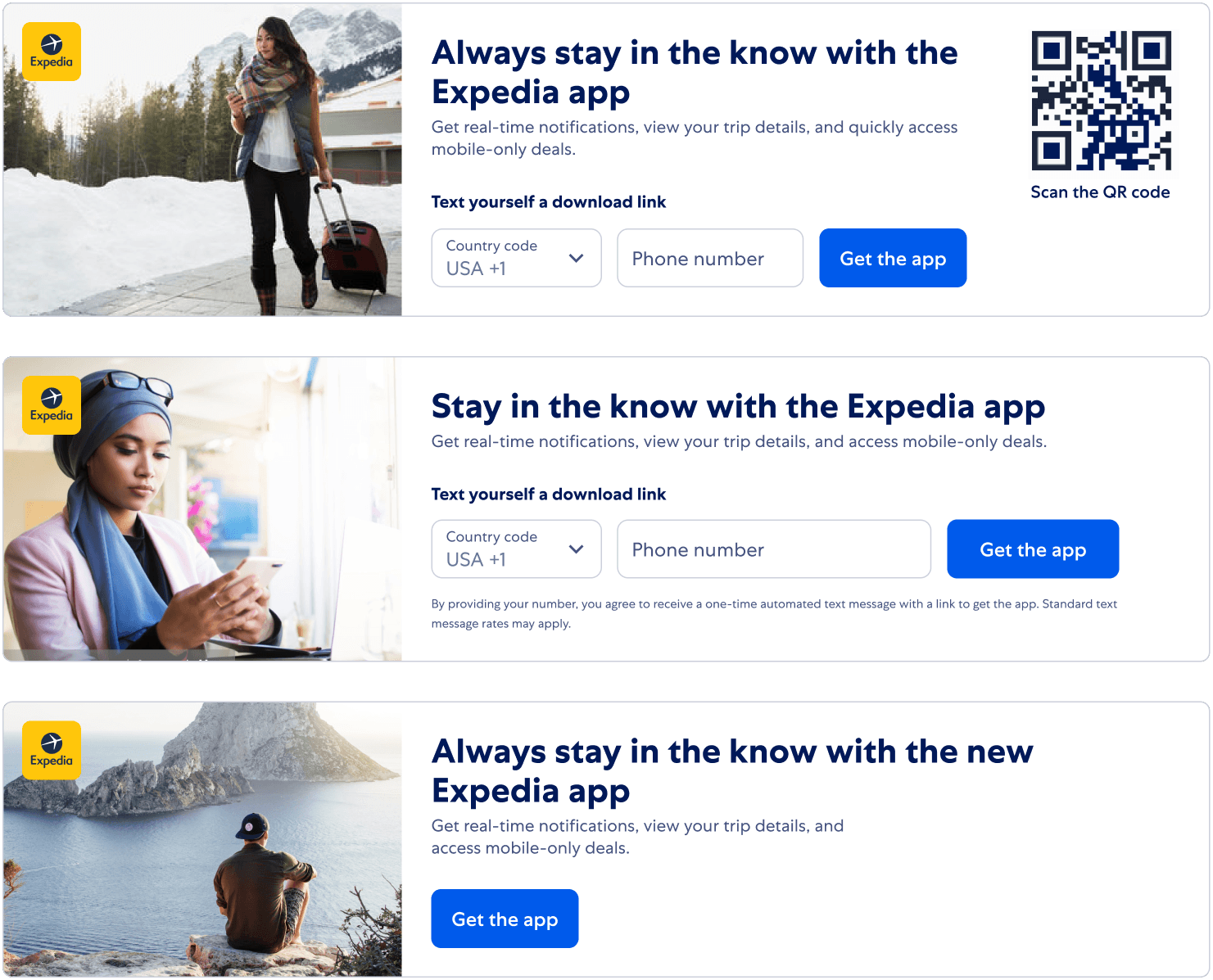
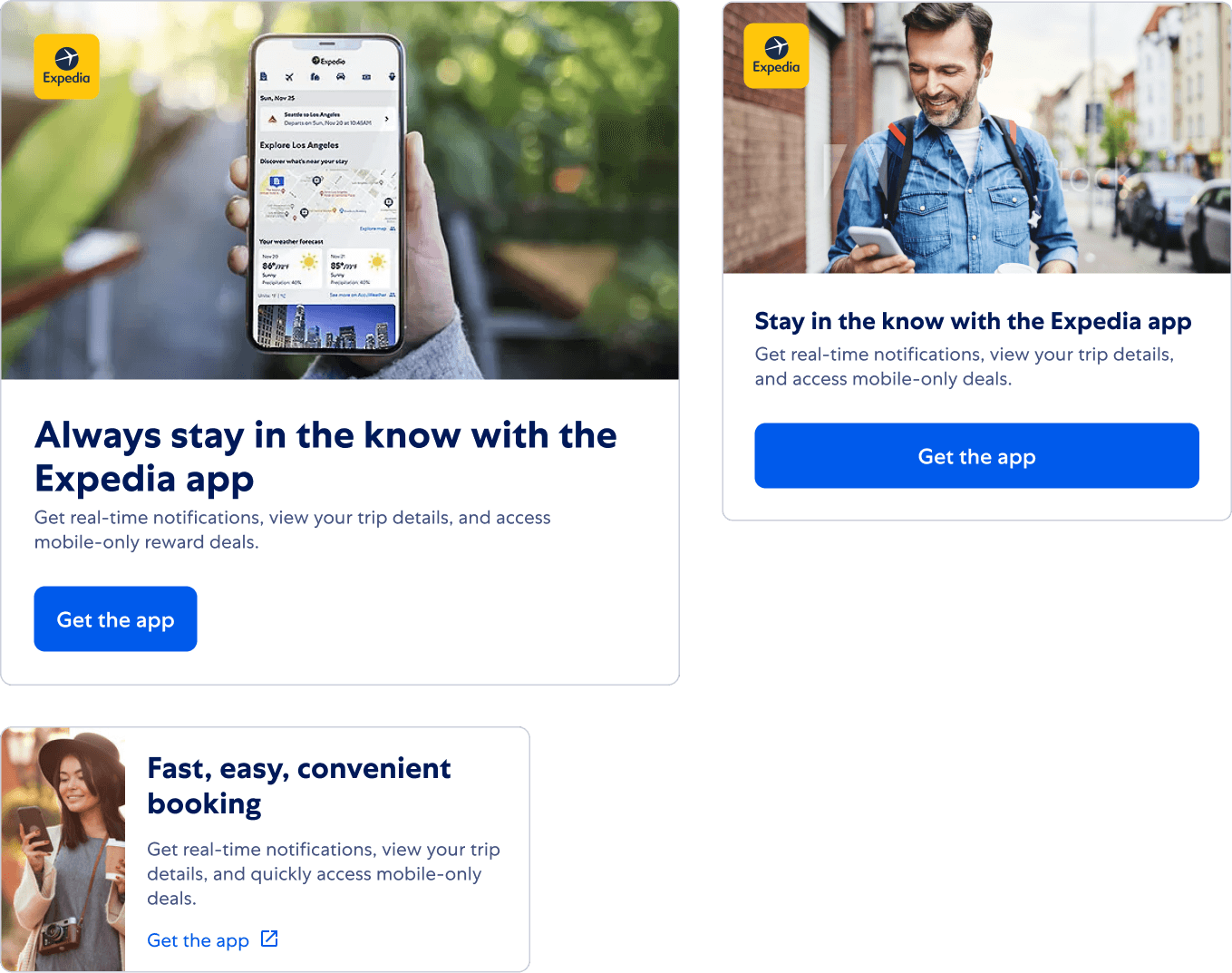
New: MAD Marquee Designs
Final designs enabled comprehensive testing across value propositions, imagery, legal copy, and interface variations. Machine learning delivered the most effective versions to targeted audiences based on those findings.
Desktop variations of the Marquee
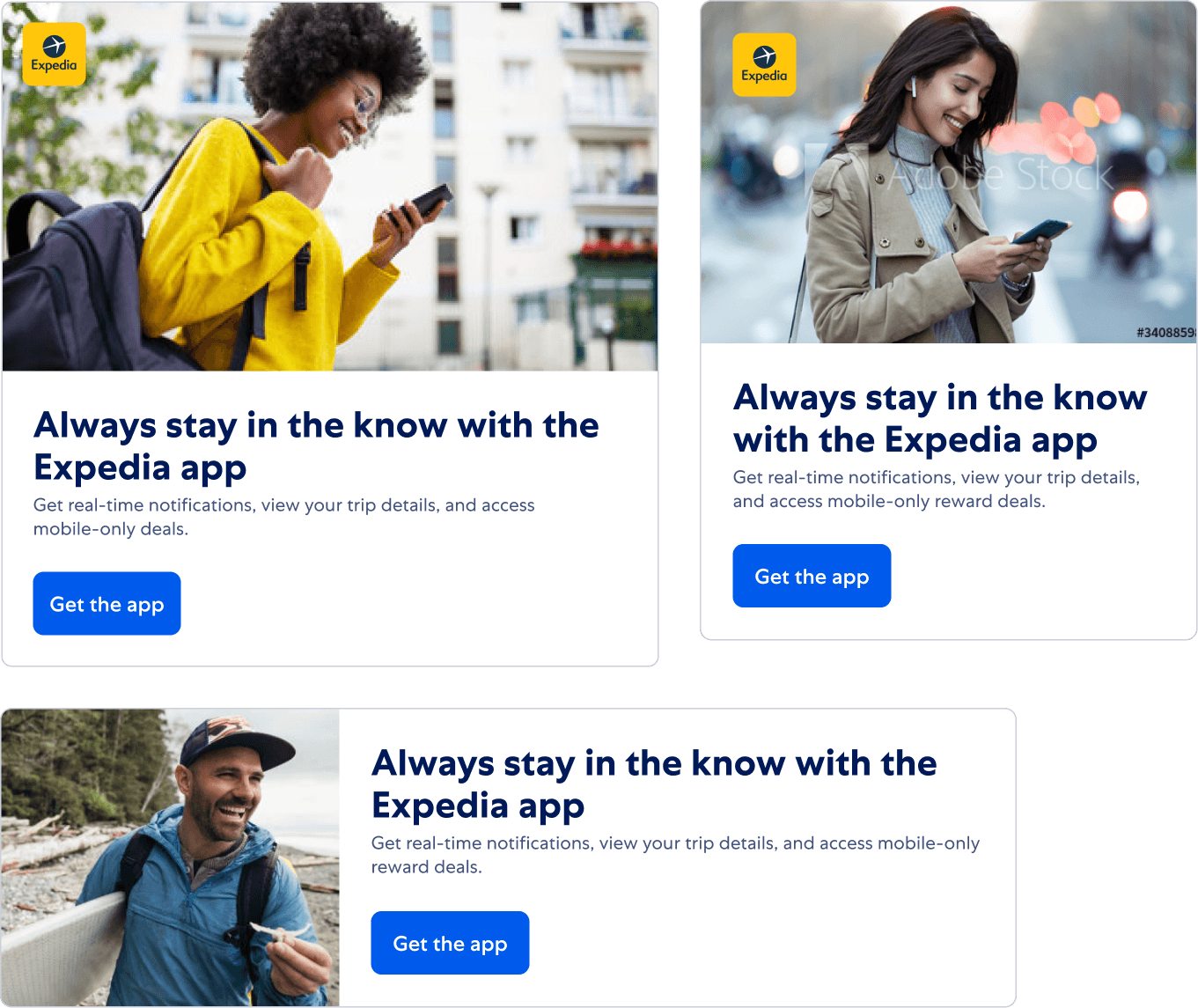
Tablet, phone and inline variations
Take-Over → App-Hero
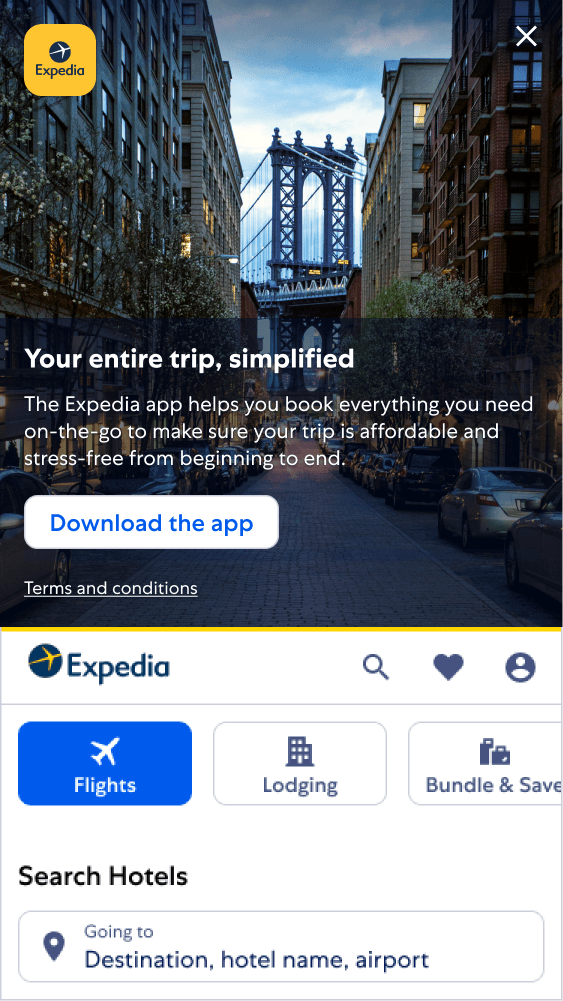
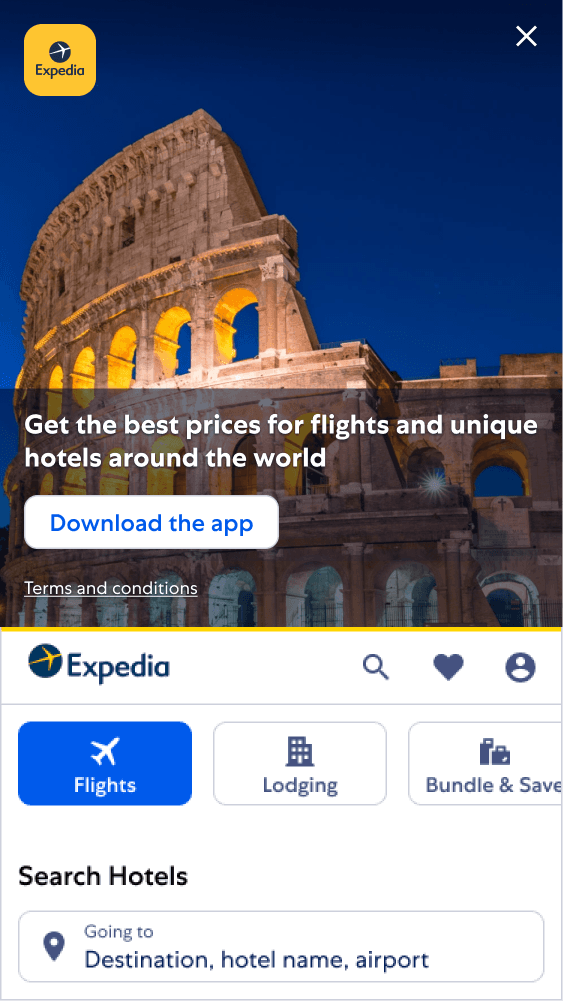
Expedia's existing Takeover component obstructed the page almost entirely for travelers who weren't interested in downloading the app. Research showed favorable reception in APAC markets but strong aversion in North America. Rather than retire it, I redesigned it as the App-Hero, keeping primary booking functions accessible at the bottom of the screen. If the targeting system placed the wrong bet, the traveler could still complete their primary task without friction. Usage guidelines in the design system reflect this, the App-Hero carries the highest placement warnings in the system, reserved in North America almost exclusively for high-volume sales events like Black Friday and Cyber Monday.
The old version of the "Take-Over"
Research showed favorable reception in APAC markets but strong aversion in North America. Rather than retire it, I redesigned it as the App-Hero.
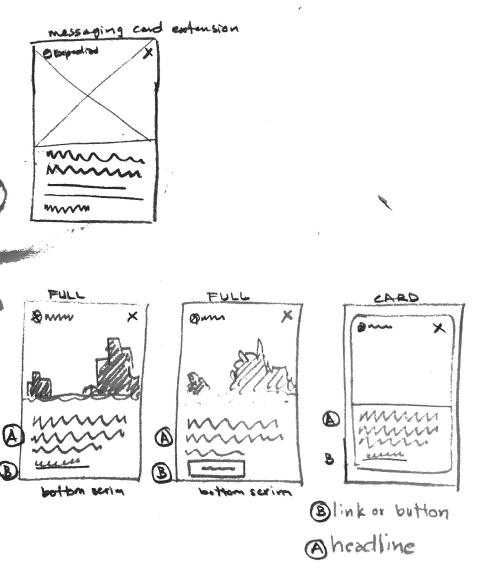
Early wire explorations of the App-Hero
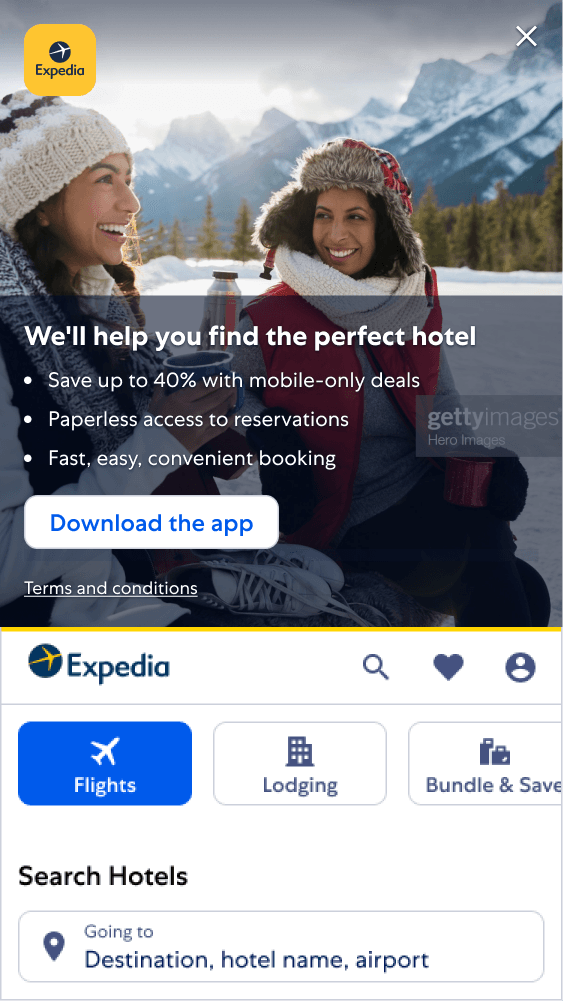
The Redesign
The redesigned App-Hero kept Expedia's homepage accessible while giving travelers a clear, on-brand prompt to download the app.
App Landing Page
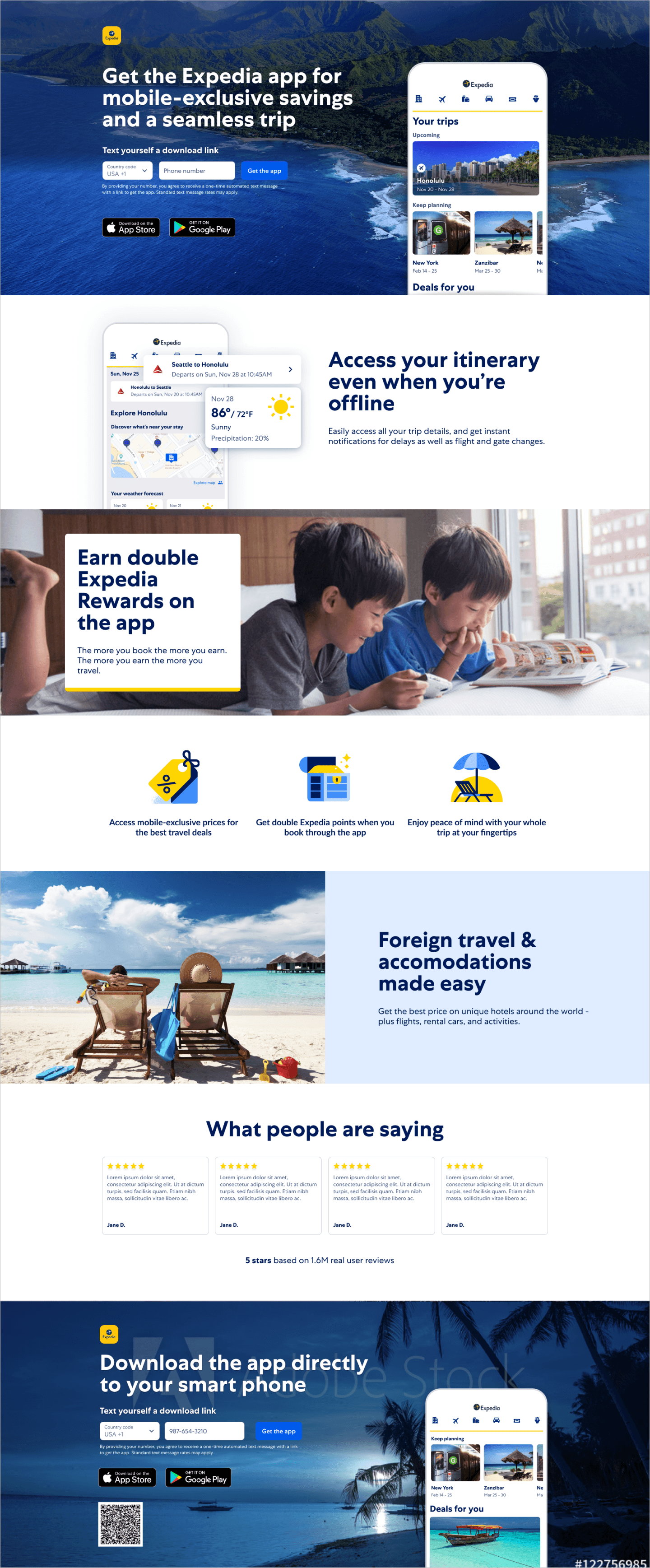
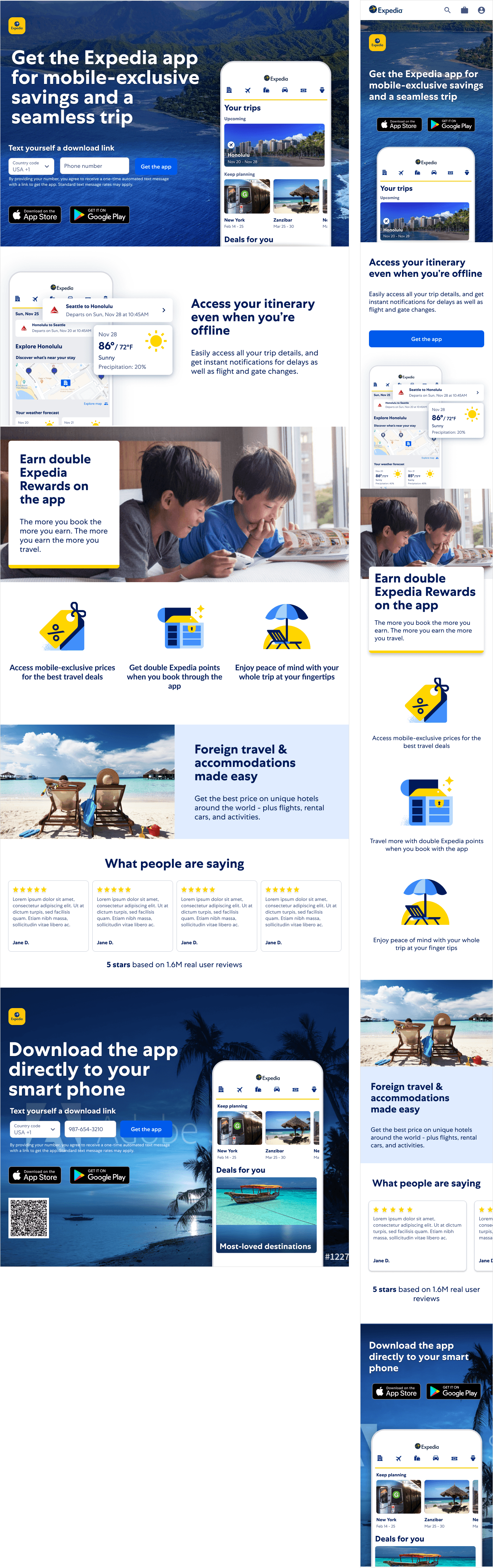
My final project with the MAD team set out to bring every previous learning into a single, cohesive experience. The work was in progress when a corporate reorganization reassigned the team to other departments. The strategic intent, consolidating MAD's accumulated research into one destination, remains one of the more interesting design challenges I worked through at Expedia.
In-progress desktop version
In-progress Tablet and Phone versions
Travel Advisories
A/B Testing During COVID
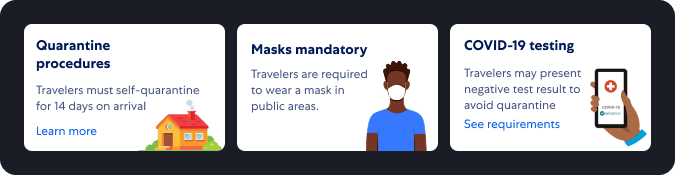
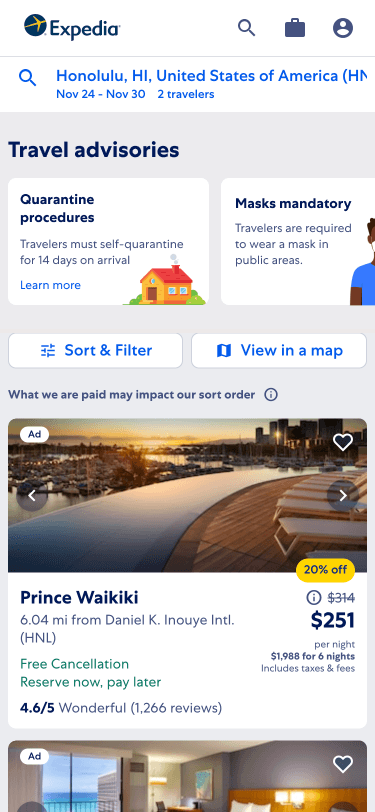
Working directly with a Senior UX Researcher, I designed and built working prototypes to A/B test treatments helping travelers navigate COVID-19 requirements in real time, quarantine procedures, mask mandates, and testing requirements integrated directly into the booking experience.
Team:
Myself (Principal Designer) and Sr. UX Researcher
Outcome
While COVID-19 devastated the travel industry, the MAD system held Expedia's app download rates steady with modest gains at a moment when decline was the industry norm. That result was the product of a system built to adapt, regionally, contextually, and continuously.